The ground scorched beneath our bare feet as we staggered along the rocky coast. The year is 1527, and we were stranded on the desolate shores of the Gulf of Mexico. Our ship had struck rocks near Galveston Island, leaving only a handful of us alive. After a failed journey to Florida—driven off course by storms and cursed by a sequence of misfortunes—we finally met our demise, stranded in a land no European expedition had explored before. Now, with little more than salt in our mouths, we plan to trudge inland with no choice but to search for the natives rumored to inhabit this territory.

My entry today is made possible by God Himself. It is by His mercy, or perhaps His punishment, that we endure. Not long after heading inland, we came upon a tribe who, after a rigid exchange and a small offering, allowed us to travel with them. Hunger is constant. I have eaten ants, venomous snakes, even bone—but worst of all were the roots: “These people’s victuals are primarily roots… very bad to eat and make you swell up… But these people are so hungry for roots that they’ll walk many miles to find them” (Cabeza de Vaca 8). These words ring true; I can still feel the bitterness on my tongue. Yet even in suffering, God finds ways to reveal Himself. One morning, five sick Indians came to us, offering their bows and arrows—pleading for healing. Castillo, one of the few who remains with me, stood before them and made the sign of the cross. The rest of us prayed as best we could.
“Our Lord heard our prayers, because the next morning each of the sick men awoke in fine condition. The Indians were amazed… Our fame as healers spread far and wide, and Indians of many tribes came to us seeking cures” (Cabeza de Vaca 9). What began as desperation became a miracle. From beggars, we were transformed into healers, with tribes traveling miles to place their trust in us. This was both a blessing and a burden, for survival itself became tied to the expectations of those who saw us as chosen by God.
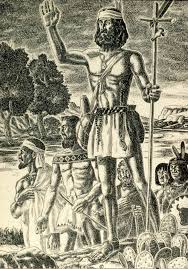
During this time, we met many natives I could not admire—especially the warriors. “Nor do the warriors carry heavy loads, leaving that to the women and old men. Some of them habitually commit the Crime against Nature. And furthermore, they lie, steal, and cheat” (Cabeza de Vaca 8).
Although their ways repel me, the pure athletic endurance and strength is undeniable: they were able to “…chase a deer without stopping from morning to night, without resting or getting tired, until the animal is exhausted” (Cabeza de Vaca 8). This paradox of contempt and admiration has defined much of our journey thus far, as survival has forced us to see both the flaws and the virtues of the people we encountered.
Reading this journey alongside Gonzalo Fernández de Oviedo’s Natural History of the West Indies shows that these conflicted attitudes toward Indigenous peoples were common among early chroniclers. Oviedo often mixed superiority with fascination, revealing how writers justified conquest even as they depended on Indigenous knowledge to survive (Oviedo y Valdés).

Works Cited
Cabeza de Vaca, Álvar Núñez. Shipwrecks and Commentaries. Translated by Fanny Bandelier, Barnes & Noble Books, 1993.
 Ben's Blog
Leave a comment