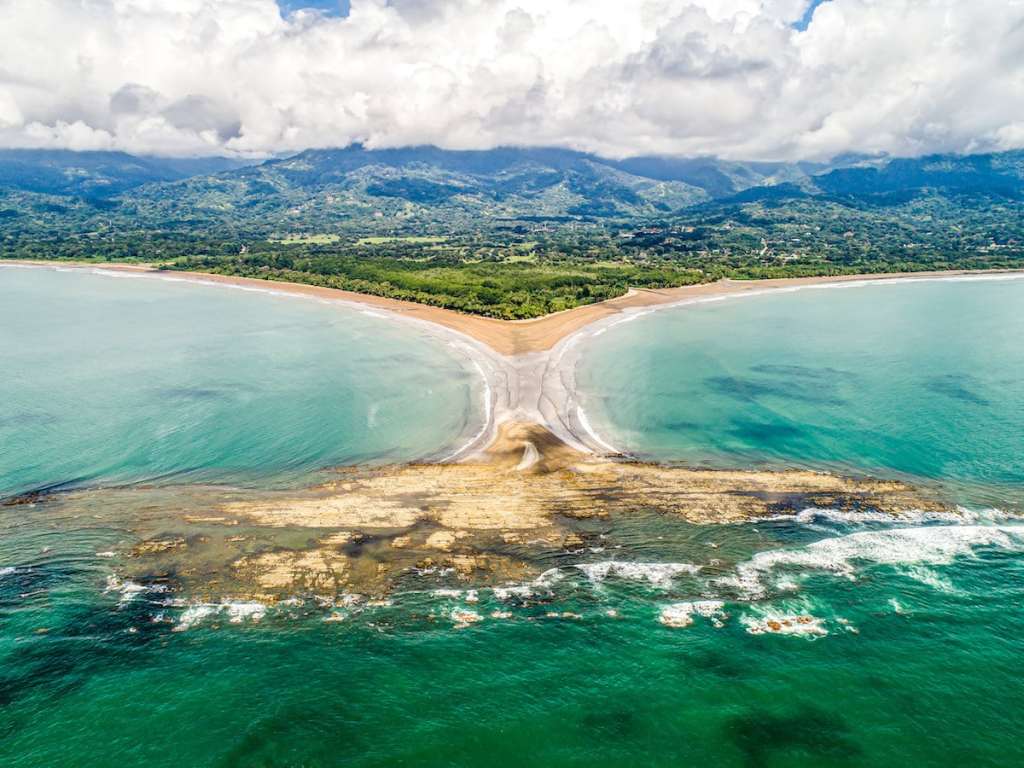
After writing my first two blogs as fictional journeys through Latin America, I wanted this one to feel more grounded in reality and relatable to modern experiences. Just over a year ago, I traveled to Uvita, a small coastal town about 60 kilometers from Quepos, located on Costa Rica’s Pacific coast. Known for its beautiful beaches, turquoise, nearly translucent water, and untouched rainforests and waterfalls, Uvita is a traveler’s paradise. While the salty scent of the ocean filled the air in the early morning, by nightfall it was replaced by the thick humidity of thunderstorms and the earthy fragrance of wet soil, trees, and sweet fruit surrounding us. Although Uvita is an eco-adventurer’s paradise, its surrounding small towns offered an equally diverse and layered experience that, when reflected upon through the lens of what we’ve learned in class, helps me better understand not only what we mean when talking about the Global South, but also how inequality, cultural interaction, and identity continue to shape life across the region.
puravidamoms.com
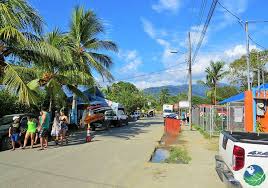
One document from our course that mirrored my experience in Costa Rica was Timothy Shaw’s Global South and World Politics, specifically when he said that the Global South isn’t defined by geography but by “histories of hierarchy and inequality.” Uvita was a perfect example of this. Right next to the foreigners’ luxury houses that sat on the beaches and hills overlooking the ocean, barefoot children went up and down the streets trying to sell a coconut or mango for less than twenty-five cents, hoping to earn enough for their own meal that day. While tourists have brought money to the area, overall benefiting the community, the wealth disparity is a reminder of the hidden history of colonial trade and labor, demonstrating how centuries-old actions still create structural inequalities in the modern day.
Costarica.org
The more I go through this course, the more I begin to see how Uvita represents more than an off-the-beaten-track tourist destination; it is an active boundary between local and global forces. A living border between the modern world and tradition, an intersection of global and local influences, a true contact zone. As Mary Louise Pratt put it, “cultures meet, clash, and grapple with each other,” and Uvita is a modern demonstration of this. From the restaurants that cater to both locals and foreigners, to the bilingual signs along the main road, and the quiet negotiation between corporate developers and local preservationists, transculturation defines daily life here. This coexistence in Uvita reflects perfectly what Fernando Ortiz described, where cultures do not simply mix but transform one another in complex, often unequal ways. In the end, Uvita reminded me that cultural identity is never static; it is constantly being rewritten through encounters, exchanges, and the everyday choices of the people who call these places home.
Works Cited:
- Shaw, Timothy M. Global South and World Politics. Routledge, 2018.
- Pratt, Mary Louise. Imperial Eyes: Travel Writing and Transculturation. Routledge, 1992.
- Ortiz, Fernando. Cuban Counterpoint: Tobacco and Sugar. Duke University Press, 1995.
 Ben's Blog
Leave a comment