Growing up, travel always felt like exploration, a break from reality where I could refresh and experience something new outside of my day to day life. It was something I chose. However, sitting in class the other day made me think about the places people cross not because they want to, but because they have no other option. The Darién Gap is one of these places, a dense stretch of jungle between Colombia and Panama where no roads or well-beaten paths exist, a line that marks the separation of Central and South America. Its rugged terrain, extreme heat, and dangerous inhabitants, mostly consisting of drug traffickers and armed groups, make it one of the most dangerous places to pass through in the entire world. Yet still, in 2023 nearly 400,000 refugees took the risk because that danger was a lesser risk than staying where they currently were.
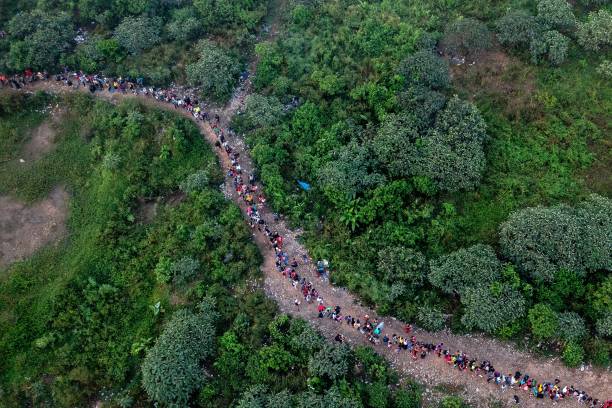
People choose this route because they are not really choosing at all. Economic collapse, political instability, and constant violence push families out of their homes with no realistic way back. According to recent reports on regional migration, more than half a million people crossed the Darién in 2023, most from Venezuela, Ecuador, and Haiti. Although many survive the crossing, large numbers face robbery, assault, extortion, or death along the way. Medical studies have documented significant mortality among children and adolescents attempting the journey, a sign of just how desperate families are to flee the conditions at home.
Timothy Shaw helps explain this in Global South and World Politics, where he writes that the Global South is shaped by “histories of hierarchy and inequality” that limit the options available to millions (Shaw 4). When viewed through Shaw’s lens, the Darién is not simply a dangerous landscape. It is a product of the inequality that leaves people with no other route forward. Their passage through the jungle reflects structures that have failed them long before they ever stepped onto the trail.
This connection becomes clearer when thinking about the testimony in the FARC documentary we studied in class. One former guerrillera, when asked why people take such dangerous paths, described growing up in a world where asking for basic human rights could cost you your life: “En un país como el nuestro, si pedías derechos, te mataban” (“Farc Guerrillas”). Her words reflect the same forces that push migrants into the Darién today. When your government or country no longer acts as a protector but becomes something you must protect yourself from, violence and fear begin to define your daily existence. When survival feels uncertain, the human instinct is to do everything possible to stay alive, and crossing a deadly stretch of jungle begins to feel like the only logical option.
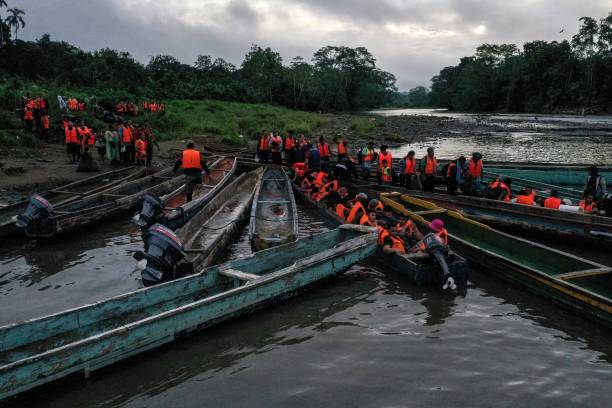
In the end, the journey through the Darién Gap reveals the larger truth behind migration. Many travelers are not searching for opportunity but escaping a life where every day carries the threat of violence or collapse. Shaw’s argument about the Global South and the testimony from the FARC documentary both show how inequality shapes who is forced to move and why. While the Darién is physically dangerous, its existence as a migration route tells an even deeper story about the systems that leave people with no choice but to risk their lives to save them.
Works Cited
Shaw, Timothy M. Global South and World Politics. Routledge, 2018.
“Farc Guerrillas: Last Days of Blood in Colombia.” The Guardian, uploaded by The Guardian, 2014.
Migration Data. Regional migration statistics on the Darién Gap, 2023.
 Ben's Blog
Leave a comment